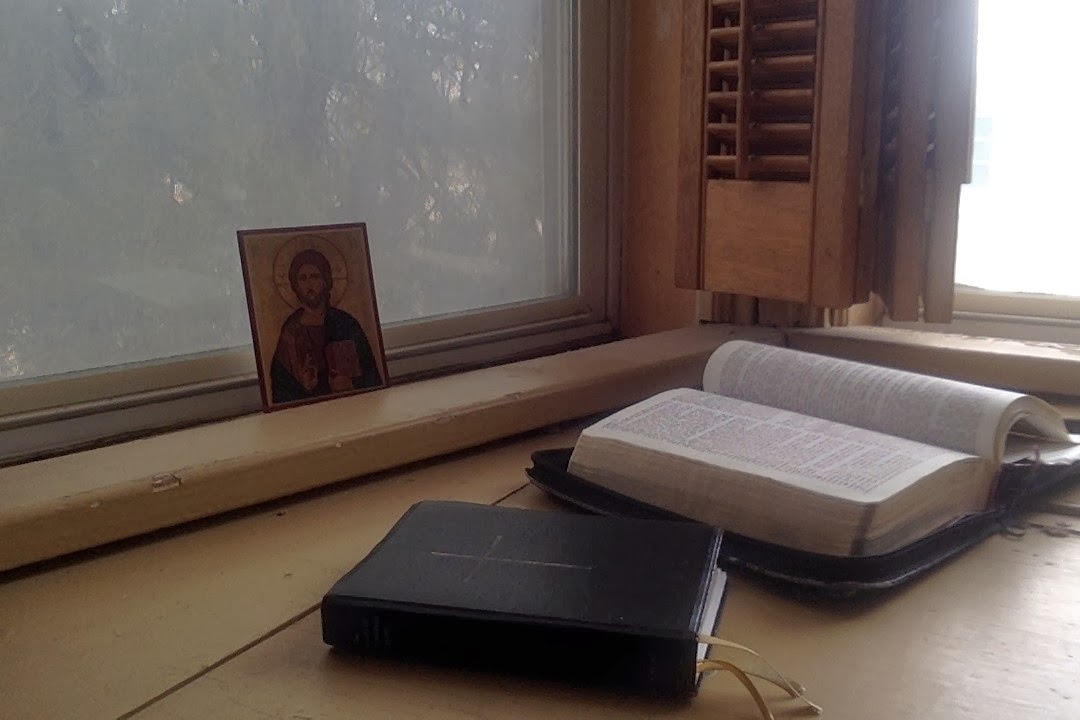
"Send out Your light and Your truth, that they may lead me, and bring me to Your holy hill and to Your dwelling." Psalm 43:3

Saturday, March 15, 2014

Saint Patrick, Devoted to Christ "at the Margins"


Glorious Lord, I give you greeting!
Let the church and the chancel praise you,
Let the chancel and the church praise you,
Let the plain and the hillside praise you,
Let the world's three well-springs praise you,
Two above wind and one above land,
Let the dark and the daylight praise you.
Abraham, founder of the faith, praised you:
Let the life everlasting praise you,
Let the birds and honeybees praise you,
Let the shorn stems and the shoots praise you.
Both Aaron and Moses praised you:
Let the male and the female praise you,
Let the seven days and the stars praise you,
Let the air and the ether praise you,
Let the books and the letters praise you,
Let the fish in the swift streams praise you,
Let the thought and the action praise you,
Let the sand-grains and the earth-clods praise you,
Let all the good that's performed praise you.
And I shall praise you, Lord of glory:
Glorious Lord, I give you greeting!
           ~ Welsh poem, eleventh century, as found in the compilation 
      Daily Readings from Prayers and Praises in the Celtic Tradition, edited by Allchin and de Waal


The above is a hymn of praise that is not from the time of Saint Patrick, nor is it Irish (of course, neither was Patrick himself originally; he was born a Roman Briton in what is today Wales).  Nonetheless, I think it well reflects the spiritually of the patron saint of Ireland, a spirituality that is broad and embracing, knowing God as both intimate daily companion and Lord of Creation, praised by all that is.

The success of Thomas Cahill's book How the Irish Saved Civilization, is well deserved.  It is a wonderful little book, beautifully written in a way that makes scholarship accessible to a broad audience.  The excerpts below are from the chapter in that book entitled, "Good News from Far Off: The First Missionary".
Patrick really was a first -- the first missionary to barbarians beyond the reach of Roman law.  The step he took was as bold as Columbus's, and a thousand times more humane.  He himself was aware of its radical nature.  "The Gospel," he reminded his accusers late in his life, "has been preached to the point beyond which there is no one" -- nothing but the ocean.  Nor was he blind to his dangers, for even in his last years, "every day I am ready to be murdered, betrayed, enslaved -- whatever may come my way.  But I am not afraid of any of these things, because of the promises of heaven; for I have put myself in the hands of God Almighty."
According to Cahill, Patrick was not only the first true missionary beyond the borders of the Roman Empire,  he was also "the first human being in the history of the world to speak out unequivocally against slavery."  Surely, Patrick's own experience as a slave in Ireland played a part in his unmitigated condemnation of slavery.  That experience during his formative years, which also occasioned his conversion, wrought in Patrick an unswerving devotion to Christ and a "core of decency" that was to serve him well in his mission to the Irish.  For, says Cahill, Patrick was at heart "a good and brave man, one of humanity's natural noblemen."  As with all such men and women, he stands out as one who did not conform to many of the conventions of the day, especially if they were an offense to justice and humanity.
His love for his adopted people shines through his writings, and it is not just a generalized "Christian" benevolence, but a love for individuals as they are.  He tells us of a "blessed woman, Irish by birth, noble, extraordinarily beautiful (pulcherrima) -- a true adult -- whom I baptized."  Who could imagine such frank admiration of a woman from the pen of Augustine?  Who could imagine such particularity of observation from most of those listed in the calendar of saints?
He worries constantly for his people, not just for their spiritual but for their physical welfare.  The horror of slavery was never lost on him: "But it is the women kept in slavery who suffer the most -- and who keep their spirits up despite the menacing and terrorizing they must endure.  The Lord gives grace to his many handmaids; and though they are forbidden to do so, they follow him with backbone."  Patrick has become an Irishman, a man who can give far more credibility to a woman's strength and fortitude than could any classically educated man.
In his last years, he could probably look out over an Ireland transformed by his teaching.  According to tradition, at least, he established bishops throughout northern, central, and eastern Ireland: he is primatial bishop at Ard Macha (modern Armagh), a hill away from Emain Macha, seat of the Ulster kings ... By placing his bishops next door to the kings, Patrick hoped to keep an eye on the most powerful raiders and rustlers and limit their depredations.
With the Irish -- even with the kings -- he succeeded beyond measure.  Within his lifetime or soon after his death, the Irish slave trade came to a halt, and other forms of violence, such as murder and intertribal warfare, decreased.  In reforming Irish sexual mores, he was rather less successful, though he established indigenous monasteries and convents, whose inmates by their way of life reminded the Irish that the virtues of lifelong faithfulness, courage, and generosity were actually attainable by ordinary human beings and that the sword was not the only instrument for structuring a society.
Though Patrick's immense influence on his adopted homeland is widely recognized today, Cahill writes that, "In his own time, only the Irish appreciated him for who he was."  In fact, when the tables turned later in the century and the kings on the western coasts of Britain began slave-raiding into Ireland, Patrick's attempts to halt the practice by appealing to his Briton brethren's Christian faith went largely ignored.  Patrick laments, "Can it be that they do not believe that we have received one baptism or that we have one God and Father?  Is it a shameful thing in their eyes that we have been born in Ireland?"   In fact, the British eventually respond to Patrick's "meddling" by seeking to discredit him through a smear campaign.  It is in this context that Patrick writes his Confession, the primary source of our information about him.  In assessing Patrick's confrontations with the people of the land of his birth, Cahill writes:
Patrick, whose awkward foreignness on his return to Britain had been the cause of numerous rebuffs,  knows in his bones the snobbery of the educated Roman, who by the mid-fifth century had every right to assume that Roman and Christian were interchangeable identities.  Patrick, operating at the margins of European geography and human consciousness, has travelled even further from his birthright than we might expect.  He is no longer British or Roman, at all.  When he cries out in his pain, "Is it a shameful thing ... that we have been born in Ireland?" we know that he has left the old civilization behind forever and has identified himself completely with the Irish.
In Saint Patrick, we have more than mere legend.  We have a life lived honestly, faithfully, compassionately, and sacrificially.  It is a life that stands out, both in the Church and in human history, such that it rightly becomes legendary.  Cahill concludes,
In becoming an Irishman, Patrick wedded his world to theirs, his faith to their life.  For Augustine and the Roman church of the first five centuries, baptism, the mystical water ceremony in which the naked catechumen dies to sin, was the foundation of a Christian life.  Patrick found a way of swimming down to the depths of the Irish psyche and warming and transforming Irish imagination -- making it more humane and more noble while keeping it Irish.  No longer would baptismal water be the only effective sign of a new life in God.  New life was everywhere in rank abundance, and all of God's creation was good.  The druids, the pagan Irish priests who claimed to be able to control the elements, felt threatened by Patrick, who knew that a humble prayer could even make food materialize in a barren desert -- because all the world was the work of his Creator-God. 


Almighty God, whose will it is to be glorified in your saints, and who raised up your servant Patrick to be a light in the world:  Shine, we pray, in our hearts, that we also in our generation may show forth your praise, who called us out of darkness into your marvelous light; through Jesus Christ our Lord, who lives and reigns with you and the Holy Spirit, one God, now and forever.  Amen.
~ The Book of Common Prayer, from the Common of Saints, Of a Missionary


Wednesday, March 12, 2014

Lent Madness: meh, maybe, actually ... no


So, Lent Madness.  I was introduced to it last year, about halfway through the Lenten season.  Since I love history and learning about the saints, I kind of got into it, though I don’t even follow the actual NCAA March Madness (that’s right, I am a certified heretic here in Kansas).  I also really like Scott Gunn and the things put out by Forward Movement.  I never did jump in with both feet though.  I know it is meant to be both fun and educational, an innovative way of introducing or reintroducing the heroes of the faith, but the whole concept of voting for saints in a competitive bracket sat uneasily with me from the start.  And, I’ll confess, after Frances Perkins won the “golden halo” last year, I was one of those who was like, “Wait – what?”

So, I’ve been kind of ambivalent about it, and I wasn’t planning on taking part this year.  But, as mentioned, I’ve got great respect for the guys behind this idea ( I was also pleased to see that Fr. Robert Hendrickson is going to be one of the "celebrity bloggers" this year), and there has also been some gentle encouragement from my own rector for our parish to get involved.  We even have the bracket posted in our parish hall.  So, I decided rather last minute to give Lent Madness a second chance.  I voted in the first two or three rounds, and was generally enjoying it.  Then I read this post by the Crusty Old Dean, and it reminded me of (or helped me to clarify) all the reasons why I really don’t care for Lent Madness.  (His post is much more informative than this one of mine, so if you're pressed for time, tarry not here.)  So, I decided to sit on the sidelines for a bit.  I would still follow the posts about the saints from day to day, but would refrain from voting. 

Well, after yesterday’s matchup, I’m not even sure I want to continue to follow the posts.  The bout was between Antony of Egypt and Mary of Egypt.  It turned into something of a riot in the comments section.  Commenters had no shortage of fodder for their fast and furious input.  We had two ascetic desert hermits from the North Africa of the third and fourth centuries. Hard to imagine a more far removed time, place, and culture. Now throw in a bunch of 21st century American Christians, some of whom are being introduced to these saints for the first time via a three paragraph introduction on an admittedly snarky website that casts saints in competitive head-to-head matches – what could possibly go wrong?

Some were suspicious of Antony’s motives in giving away all his worldly possessions.  Some found Mary’s whole hagiography problematic, either viewing her as the victim of patriarchal misrepresentation or seemingly dismissing the very idea of sexual sin (one commenter criticized Mary for engaging in “self slut shaming”).  The most frequent topic of discussion, however, concerned Antony’s sister.  According to the “celebrity blogger” who introduced Antony for this round, after Antony “heard the gospel command to not worry about tomorrow, he promptly gave away what remained of his money, put his sister in a house of virgins, and took up a life of solitude.” As soon as I read that, I knew there would be comments a-plenty, but holy cats, even I was taken aback. The resounding cries of condemnation ran the gamut, describing Antony as “a very off-putting figure”, an “unfeeling brother”, and a “loser”. The one that took the cake, and which I must believe was intentionally inflammatory was: “Antony was a crazy jackass who treated his sister abominably. Boo.”  Quite a few people declared that they were choosing not to vote this round, apparently as a kind of protest against being expected to choose between two equally unworthy candidates.  Incidentally, I found it puzzling that nowhere in the introductory blog was there mention of Antony as the father of monasticism.  I would think that’s a pretty significant detail.
 
Unlike the Crusty Old Dean, I would stop well short of identifying myself as a Lent Madness hater.  In fairness, there was no small number of commenters who very ably made the case for seeking to understand Antony and Mary on their own terms, not through a modern lens, for doing further research rather than jumping to conclusions based on such scanty information, and for being open and humble enough to recognize Christ in the other, even and especially when that other seems incomprehensible (this seemed to be the primary challenge to these saints’ detractors; they simply could not or would not see beyond their own modern assumptions).  In conclusion, I don’t expect to be jumping on the Lent Madness bandwagon this year.  Primarily, it’s a matter of personal taste, so I don’t want to make too much of this.  But there is also an element of my distaste that is based on principle.  I absolutely believe that we should be encouraging people (and taking the opportunity ourselves) to learn about and reflect over the lives of the saints.  I’m not sure Lent Madness is the best way to do it.  It’s a venue that seems, by its very organizational structure, to encourage simplistic thinking and polarization.  This corresponds with my more general and increasing skepticism about the potential of any social media for fostering meaningful community.  Sometimes it seems to happen, but the potential for misunderstanding and damage seems so much greater that I wonder if it’s worth it.  Maybe I’m being too negative; I pray that those who take part in Lent Madness are strengthened and inspired in their faith as they learn about the great broadness of the communion of saints.  It seems that many would claim this has indeed been true in their experience.  But not in mine.  So, maybe I’ll give up following Lent Madness for Lent.

Peace of Christ.            

Saturday, March 8, 2014

"That the love wherewith Thou didst love Me may be in them"

"And I have made Thy name known to them, and will make it known; that the love wherewith Thou didst love Me may be in them, and I in them."
~ John 17:26

From today's Daily Office reading, the closing verse of the seventeenth chapter of the Gospel according to Saint John, our Lord's "High Priestly Prayer".  Jesus has revealed the Father to us, and will continue to reveal Him more and more, according as the Spirit of Jesus is within us.  Both the means and the end of this revelation is nothing less than invitation into the love that is the very life and substance of the Triune God.


Peace of Christ.

Friday, February 28, 2014

Thoughts on Reading Atherstone's 'The Reformation: Faith and Flames'

I consider this a pretty basic introductory text on the Reformation.  At 180 pages, it might appropriately be labeled as a "coffee table book": glossy pages, lots of pictures, some maps, and text boxes within the text.  This is not to imply, however, that the book is unsubstantial in its treatment.

I did not come to the book with any naive notions of the glories of the Reformation; you won't find me celebrating "Reformation Day" on All Hallows' Eve.  I've heard the Reformation described as "tragic necessity" and even that is a bit too generous for me.  Reform was needed, undoubtedly, but the schism that resulted is hardly a cause for celebration.  Even beginning with such a view in mind, however, I was struck by the overall brutality of the period, as presented by Atherstone.  The physical violence perpetrated by Catholic and Protestant (with notable exceptions, like the humanists and the Anabaptists), as well as the constant barrage of vitriolic polemic, made for a pretty depressing read.  By this shall all men know you are My disciples, if you have love for one another?  Not in the sixteenth century.  I haven't studied the Reformation enough to know whether perhaps Atherstone placed undue emphasis on such violence in a book of this size and scope.  However, even if he did, the fact of such things remains.

An exception to this violence and absolutism was to be found in the humanist scholars, so called from the university curriculum studia humanitatis.  They looked hopefully to the future, even as they looked back critically and studiously to the knowledge and traditions of the ancients.  Their motto was ad fontes (back to the sources), and they helped to bring about a rebirth of learning in the Church and society.

Unarguably, the greatest of the humanist scholars, at least in northern Europe, was Desiderius Erasmus.  This Dutch scholar's "vast array of publications included manifestos on education and eloquence, collections of proverbs, devotional and doctrinal treatises, biting satire, and volumes on philology and classical studies."  He was a great student of ancient Christianity, edited the works of Saint Jerome, and in 1516 published a highly influential Greek translation of the New Testament, which was accompanied by a "passionate preface, The Paraclesis, an exhortation for Christians to re-engage with the Bible and a critique of contemporary church practice."  Erasmus had a great love of the Scriptures, and a fervent desire to see them embraced by all, clergy and laity, noble and commoner: "let us embrace it, let us continually occupy ourselves with it, let us fondly kiss it, at length let us die in its embrace, let us be transformed in it."

With his opening up of the Scriptures and the ancient practices of Christianity, and his scathing reprimanding of the Church for its corruption, Erasmus inspired many who would become the early Reformers throughout Europe.  Later in the century, a popular saying claimed that "Erasmus laid the egg which Luther hatched."  Erasmus disputed this claim, saying that "Luther hatched a very different bird."  The two men, though early on mutual admirers, proved to be far too incompatible to become allies.  They were indeed different, in temperament, in theology and method, and in their convictions about the Church and their own place in it.  After a public back and forth debate throughout the 1520s about human freedom and God's sovereignty, the two men's break was more or less complete.  In later years, the ever bombastic Luther was unambiguous in his hostility toward the humanist, going so far as to claim, "I hate Erasmus from the bottom of my heart" and "I consider Erasmus to be the greatest enemy Christ has had these thousand years past."  For his part, Erasmus, the erudite seeker after truth come what may, was ultimately not convinced that a break with Rome was necessary, despite his reputation as a father of the Reformation.  He died a faithful son and communicant of Rome, but surrounded at his deathbed by Protestant friends.  Not one to be co-opted by ecclesial partisans, Erasmus remained ever in the middle, so to speak.  It is a place that many consider cowardly, or unprincipled, or uncommitted, which is rather ironic given the blows those who stand there by conviction are willing to absorb from all sides.  It is a place I seem to often find myself.  Consequently, I find resonant the practicality and honesty of Erasmus when he stated:
"I have never been an apostate from the Catholic Church.  I know that in this Church, which you call the Papist Church, there are many who displease me, but such I see also in your Church.  One bears more easily the evils to which one is accustomed."    

Another notable humanist is the French scholar Sebastian Castellio.  Castellio criticized John Calvin in the aftermath of the trial and execution by burning of the heretic Miguel Servetus in Calvin's Geneva in 1553.  Castellio went so far as to say that any execution for heresy was both pointless and an injustice, since Christians could not even agree in all cases as to what constitutes heresy.  In his treatise, On Heretics, Castellio wrote:
"There is hardly one of all the sects, which today are without number, which does not hold the others to be heretics.  So that if in one city or region you are esteemed a true believer, in the next you will be esteemed a heretic.  So that if anyone today wants to live he must have as many faiths and religions as there are cities or sects, just as a man who travels through the lands has to change his money from day to day ..." 
Castellio went on to declare that, "It would be better to let a hundred, even a thousand heretics live than to put a decent man to death under pretense of heresy."

In one sense, it is not at all surprising that I found myself identifying so with the humanist scholars.  I am a student also, who loves learning and the pursuit of truth, and who believes that an honest and critical examination of the past is of the first importance in such endeavors.  Like them, I do not believe we have anything to fear from the truth, and accordingly, such scholarship is a means of strengthening rather than weakening religion.  On the other hand, I found it ironic that I, who consider myself something of an eccentric traditionalist in my general outlook and personal tastes, should be so drawn to those who were, for their time, the most forward-looking and modern of men.  Perhaps I should not delude myself with thoughts of my having been born in the wrong century; I am, for better or worse, quite a creature of my own time and place after all.

One last and less serious observation: I had never noticed how popular a name was Thomas in sixteenth century England.  Only, like, almost every major player in the English Reformation period: Thomas Wolsey, Thomas More, Thomas Cranmer, Thomas Cromwell ... to mention just a few of the most notable.    


Thursday, February 20, 2014

"When the foundations are being destroyed" or, The Dangers of Plucking an Individual Verse


On my way home from work today, I was listening to a local Christian radio station.  Between a wonderfully sappy, pitch-perfect chorus jingle announcing the station (I really do love those; must be the nostalgia) and the start of whatever program was coming on next, there was a short commentary.  It was one of those 'Today's Bible Minute with Bob' type things, and it started out with this verse:

When the foundations are being destroyed, what can the righteous do? ~ Psalm 11:3

I had a suspicion about what was coming next, and I was right.  There followed a brief lecture about how society's changing definition of marriage threatened to erode the millennia old foundation established by God in the beginning.  It was predictable in its simplicity (there is not much room for nuance in a one minute commentary, after all), essentially a 'Bible says it, I believe it, that settles it' approach.  The closing words of the commentator were, "That's God's definition of marriage -- and He's stickin' to it!"

The thing that struck me most, however, was not the futility of attempting to say much of value about such a complex and controversial topic in a one minute commentary.  Rather, it was the use of the opening verse of Scripture.  If the commentator's persuasiveness was not precarious enough already, he set the tone by taking a single verse completely out of context for his purposes.  Here is the eleventh Psalm in its entirety:

In the LORD have I taken refuge;
   how then can you say to me,
   "Fly away like a bird to the hilltop;

For see how the wicked bend the bow
and fit their arrows to the string,
   to shoot from ambush at the true of heart.

When the foundations are being destroyed,
   what can the righteous do?" 

The LORD is in his holy temple;
   the LORD's throne is in heaven.

His eyes behold the inhabited world;
   his piercing eye weighs our worth.

The LORD weighs the righteous as well as the wicked,
   but those who delight in violence he abhors.

Upon the wicked he shall reign coals of fire and
                                 burning sulfur;
   a scorching wind shall be their lot.

For the LORD is righteous;
he delights in righteous deeds;
   and the just shall see his face.

Notice who it is that is bewailing the destruction of the foundations.*  It is not the Psalmist, but rather one to whom the Psalmist is directing his rebuke:  How then can you say to me, "Fly away like a bird ... the foundations are being destroyed, what can the righteous do?"  The Psalmist, by contrast, does not panic, because he has taken refuge in the LORD.  The remainder of the Psalm is in witness of God's power, His omniscience, His unassailable throne, and His ultimate judgement; and the just shall see His face.  So, what should the righteous do?  Become a culture warrior and use the democratic process to shore up the foundation of traditional American values?  Say rather, rest secure in the refuge that is our God, confident in the knowledge that He is our true foundation, and the only righteous Judge.

Peace of Christ.


* To clarify, I don't wish to imply that I think foundations are unimportant.  On the contrary, I think it is very important that we understand where we are, how we have arrived here, the beliefs upon which our assumptions are based, etc.  My contention is, rather, with the misapplication of this verse, which causes me to questions the spiritual wisdom of those who would use it in this way.

Friday, February 14, 2014

St. Gregory the Great: Be Not Possessed By Your Possessions

Pope St. Gregory contra materialistic consumerism!  Oh, those Fathers, so ancient and so timeless ...
"I want to advise you to leave everything, but I do not want to be presumptuous.  If therefore you are unable to abandon everything which the world offers, you must so hold those things that are of this world that you may not be held by them in the world; that earthly interests may be possessed, not be the possessor, and that what you have should be under the control of your mind.  Otherwise, if your mind is bound by the love of earthly things, it may itself rather be possessed by its own possessions.  Therefore, let temporal possessions be what you use, eternal things what you desire ...
"To carry out these things, we have a mediator between God and men, our helper, through whom we shall more quickly obtain everything, if we burn with true love for him, who lives and reigns with the Father and the Holy Spirit, God, for ever and ever.  Amen."         ~St Gregory the Great, Book 2, Homily 36


Sunday, February 9, 2014

I Cannot Love Better Than God


A poem by Scott Cairns, from his collection, Philokalia, entitled

The Spiteful Jesus

Not the one whose courtesy
and kiss unsought are nonetheless
bestowed. Instead, the largely
more familiar blasphemy
borne to us in the little boat
that first cracked rock at Plymouth
--petty, plainly man-inflected
demi-god established as a club
with which our paling generations
might be beaten to a bland consistency.

He is angry. He is just. And while
he may have died for us,
it was not gladly. The way
his prophets talk, you'd think
the whole affair had left him
queerly out of sorts, unspeakably
indignant, more than a little
needy, and quick to dish out
just deserts. I saw him when,
as a boy in church, I first
met souls in hell. I made him
for a corrupt, corrupting fiction when
my own father (mortal that he was)
forgave me everything, unasked.


The poem expresses a conviction of mine, which has been a cause of some reflection. I regard it as axiomatic that God is perfection, Ultimate Reality, and the One in whom there is no darkness at all. Any less a concept of God would be a contradiction of who and what God is. Consequently, it is not possible that a man could be more loving than God, or indeed 'more anything' that is good. How is it, then, that we do in fact see men and women who seem to be more compassionate than God? Mere mortals who love unconditionally, even when the love is neither sought nor returned? Who accept with loving embrace the unrepentant sinner? Who forgive without measure, even when no forgiveness has been begged? Is it not enough to answer that, since we do observe such mortals, and to the extent that their behavior surpasses the perceived goodness of God, it must be that our conception of God is 'a corrupting fiction'? I'll confess that I am thinking out loud here, and not very rigorously or systematically, at that. But the discontinuity remains. It is not possible for me to 'out-love' God. So, if I embrace my gay brother in Christ in genuine love, asking nothing of him but that he receive that love in blessing, should I not expect that this love remains but a pale reflection of the full and perfect love which God lavishes on him?


Peace of Christ.

Saturday, February 1, 2014

Re-blog: GAFCON statement: Saying 'no' to on-going theological reflection?

In response to a recent GAFCON statement, the blog "Catholicity and Covenant" posted a short reflection which I found well placed and thoughtful.  For me, this is yet further confirmation that, despite my frustrations with TEC, I would not find myself at home in a "continuing Anglican" church.  A church that declares that a mere decade or so is sufficient to pray, study, and reflect over an issue of great importance, and so, in effect, we don't need to waste time on this anymore, is not the place for me.  I am saddened by the extent to which TEC has also moved away from a truly comprehensive and encompassing vision of the Church, in practice if not in theory.  Nevertheless, such a vision still remains in TEC, while I do not think the same could be said of, for example, the ACNA.  For this reason, and bolstered both by my belief in the faithfulness of God and by my conversations with and observations of other young leaders in TEC, I am hopeful for the future of the Episcopal Church as a place where the great broadness of the gospel of our limitless God is grounded in the catholic faith that we have received from the Apostles and witnesses to whom God in Jesus Christ was made manifest.

Read the post from "Catholicity and Covenant" here.